Scoliosis in adults is a sideways curvature of the spine that can affect posture, movement and everyday activities. While some people have had the condition since adolescence, others develop it later in life due to age-related changes in the spine. The curve itself doesn’t always cause pain. Discomfort often develops when worn spinal joints, damaged discs or compressed nerves affect how the back moves and supports the body.
What Is Scoliosis in Adults?
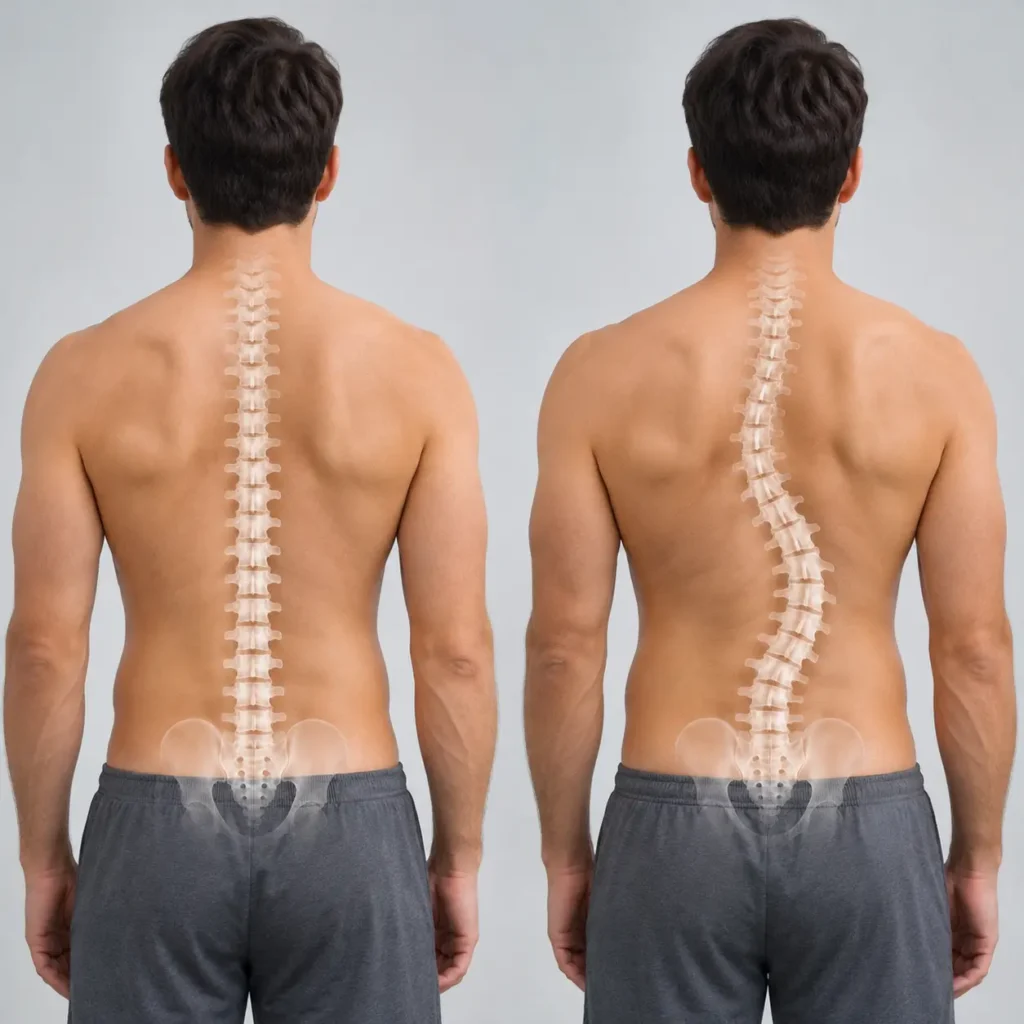
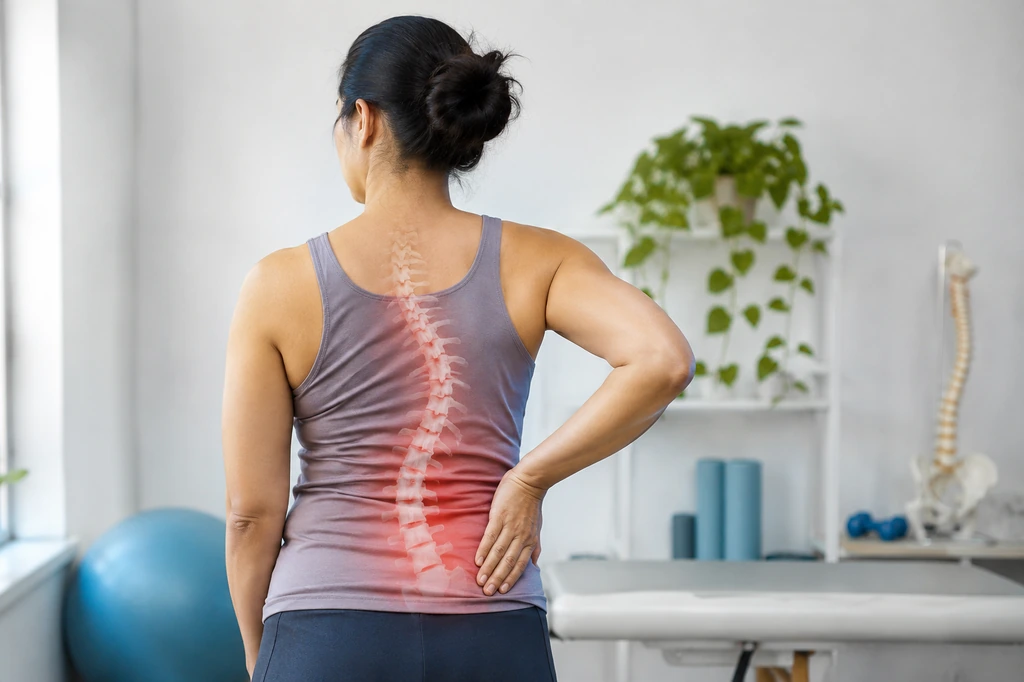
Scoliosis is an abnormal sideways curvature of the spine, generally diagnosed when the curve measures more than 10 degrees using the Cobb angle on an X-ray. When viewed from behind, scoliosis can form different curve patterns. A C-shaped curve bends in one direction, while an S-shaped curve has two curves that bend in opposite directions. The shape and severity vary from person to person.
Adult scoliosis generally develops in two ways:
- Adult idiopathic scoliosis – A curve that started during childhood or adolescence and continued into adulthood. It may progress over time in some people.
- Adult degenerative scoliosis – A new curve that develops later in life as spinal discs and facet joints undergo age-related changes. It’s also called de novo scoliosis.
Degenerative scoliosis commonly affects the lower back. As discs lose height and joints develop arthritis, the vertebrae can tilt and rotate, changing the spine’s alignment.
Why Does Scoliosis Cause Pain?
Not everyone with scoliosis experiences back pain. However, changes in spinal alignment can place uneven pressure on muscles, joints and nerves.
- Uneven muscle strain – When the spine curves, the muscles on either side may work differently to maintain balance. Some become overworked, leading to muscle fatigue, stiffness and discomfort.
- Disc and joint degeneration – Spinal discs act as cushions between the vertebrae. With age, they can lose height and flexibility. The facet joints may also develop arthritis, contributing to pain and restricted movement.
- Nerve compression – Changes in the spine can narrow the spaces around the nerves. This may cause shooting pain, tingling, numbness or weakness that travels from the lower back into the legs. Narrowing of the spinal canal is known as spinal stenosis.
- Poor spinal balance – A significant curve can shift the body’s alignment. Some adults lean forward or to one side to compensate, placing additional strain on the back and hips.
Common Symptoms of Adult Scoliosis
Symptoms vary depending on the spinal curve, age and whether nerves are affected.
Common symptoms include:
- Persistent lower back pain or stiffness.
- Uneven shoulders, hips or waistline.
- Leaning to one side while standing.
- Difficulty standing upright for long periods.
- Pain that travels into the buttocks or legs.
- Numbness, tingling or weakness in the legs.
- Muscle fatigue after walking or standing.
Some adults notice changes in their posture before experiencing pain. Others discover scoliosis while being examined for ongoing back or leg problems.
How Is Adult Scoliosis Diagnosed?
Diagnosis usually begins with a medical history and physical examination. A doctor checks spinal alignment, posture, movement, muscle strength and nerve function.
A standing spinal X-ray helps measure the curve using the Cobb angle and assess overall alignment.
An MRI may be recommended when someone has persistent leg pain, numbness or weakness, as it helps identify nerve compression and other soft tissue problems. A CT scan may be used when more detailed images of the spinal bones are needed.
Bone density may also be assessed, particularly when osteoporosis could contribute to spinal changes.
What Are the Treatment Options for Adult Scoliosis?
Treatment depends on the severity of the curve, symptoms, general health and how much the condition affects daily activities. Most adults begin with non-surgical treatment.
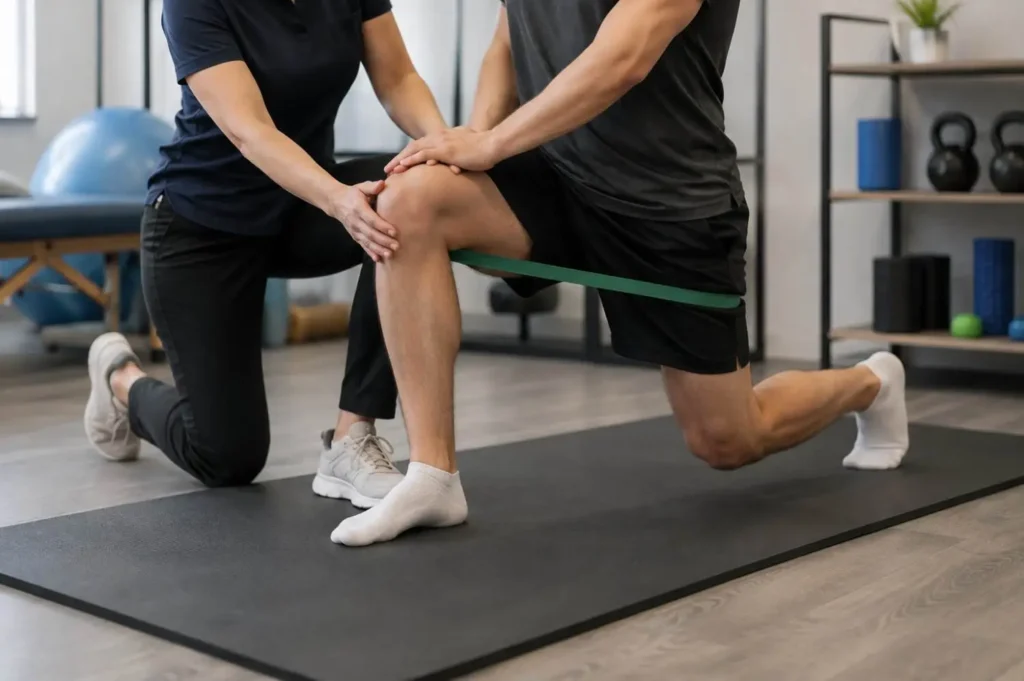
Physiotherapy and exercise – A physiotherapist can recommend exercises to strengthen the core and back muscles, improve flexibility and support better movement. Walking and other suitable physical activities can also help maintain mobility. Exercise may reduce pain, but it doesn’t usually straighten an established spinal curve.
Medication – A doctor may recommend suitable painkillers or anti-inflammatory medicines to manage discomfort. Some medications aren’t appropriate for everyone, so medical advice is important before using them.
Spinal injections – When irritated or compressed nerves cause persistent leg pain, steroid and local anaesthetic injections may provide temporary relief. Their benefits generally last weeks or months rather than providing a permanent solution.
Bracing – Braces aren’t commonly used for adults, but some people may benefit from additional support or short-term pain relief.
Surgery – Surgery may be considered when severe pain continues despite non-surgical treatment, the curve progresses significantly or nerve compression affects mobility and daily activities. Procedures may include decompression to relieve pressure on nerves and spinal fusion to stabilise the spine. Surgery involves risks and a potentially lengthy recovery, so the benefits must be carefully assessed.
When Should You See a Doctor?
Consult an orthopaedic or spine specialist if you experience persistent back pain, noticeable posture changes, worsening leg symptoms or difficulty walking and standing.
Seek emergency medical attention if you develop new bladder or bowel control problems, numbness around the groin or saddle area, or rapidly worsening leg weakness. These symptoms can indicate serious nerve compression.
Frequently Asked Questions
1. Can scoliosis develop in adulthood?
Yes, Degenerative scoliosis can develop in adulthood when age-related changes in spinal discs and joints affect the spine’s alignment.
2. Does adult scoliosis always cause pain?
No, some adults have a spinal curve without noticeable symptoms. Pain may develop when degeneration, muscle strain or nerve compression occurs.
3. Can exercise correct scoliosis in adults?
Exercise can improve strength, flexibility and movement, but it doesn’t usually reverse an established spinal curve.
4. Can adult scoliosis get worse with age?
Some curves progress over time, particularly those associated with degenerative changes. Progression varies between individuals and can be monitored through medical assessment.
5. Is surgery necessary for adult scoliosis?
No, Most adults can initially manage their symptoms with non-surgical treatment. Surgery is considered when symptoms are severe or other treatments haven’t provided sufficient relief.
Get the Right Support for Adult Scoliosis
Living with scoliosis doesn’t mean you have to accept ongoing back pain or restricted movement. A professional assessment can help identify the cause of your discomfort and determine a suitable treatment plan. Consult Prachi Shah to understand your physiotherapy options and work towards better movement, posture, and everyday comfort.
Medical Disclaimer: This article is for informational purposes only and is not a substitute for professional medical advice, diagnosis, or treatment. Consult a qualified healthcare professional for personalized advice regarding scoliosis or related symptoms.