Knee osteoarthritis is a leading cause of knee pain in adults. It starts when the cartilage that cushions the bones in your knee slowly wears away. The joint then becomes stiff, swollen, and sore, and everyday tasks like using stairs or getting up from a chair become harder.
You can’t change your age or your genes, but many other risk factors are within your control. The steps below can lower your risk and help your knees stay comfortable for years.
What Raises Your Risk
Knowing the causes helps you decide where to focus. Risk factors you cannot change include:
- Older age
- A family history of osteoarthritis
- Being female, especially after menopause
Risk factors you can change include:
- Excess body weight
- A past knee injury, such as a torn ligament or meniscus
- Weak muscles around the knee
- Repeated knee stress from certain jobs or sports
Most of your influence lies in the second group, so that is where the rest of this guide spends its time.
Keep Your Weight in a Healthy Range
Your knees take the full force of your body weight with every step, and that force is far greater than the number on the scale. Studies suggest each extra pound adds about four pounds of pressure on the knees during walking.
The reverse is also true. Losing even a small amount of weight reduces the load on the joint, and research links weight loss to less knee pain and a lower chance of developing osteoarthritis. Slow, steady habits work better than crash diets: regular movement, balanced meals, and moderate portions.
Choose Low-Impact Exercise
Cartilage has no direct blood supply, so it depends on movement to receive nutrients. Sitting for long stretches leaves the joint stiff and the surrounding muscles weak.
Low-impact activities keep you fit without pounding the knee:
- Walking on flat or gently sloped ground
- Swimming and water aerobics
- Cycling, outdoors or on a stationary bike
- Yoga and tai chi
- Elliptical training
Most health guidelines suggest about 150 minutes of moderate activity each week, which could be 30 minutes on five days. If you are new to exercise, build up slowly over several weeks.
Recreational running has not been shown to raise osteoarthritis risk in healthy knees. If you already have knee pain or an old injury, though, lower-impact options are the safer choice.
Strengthen the Muscles Around the Knee
Strong thigh and hip muscles take some of the load off the joint. When they are weak, more force goes straight into the knee. The quadriceps at the front of the thigh, the hamstrings at the back, and the glutes all play a part.
Aim for two strength sessions a week. Good exercises include:
- Straight leg raises – Lie on your back and lift one straight leg a few inches off the floor.
- Bodyweight squats – Lower as if sitting in a chair, keeping your knees in line with your toes.
- Step-ups – Step onto a low platform and back down, one leg at a time.
- Glute bridges – Lie on your back with knees bent and lift your hips.
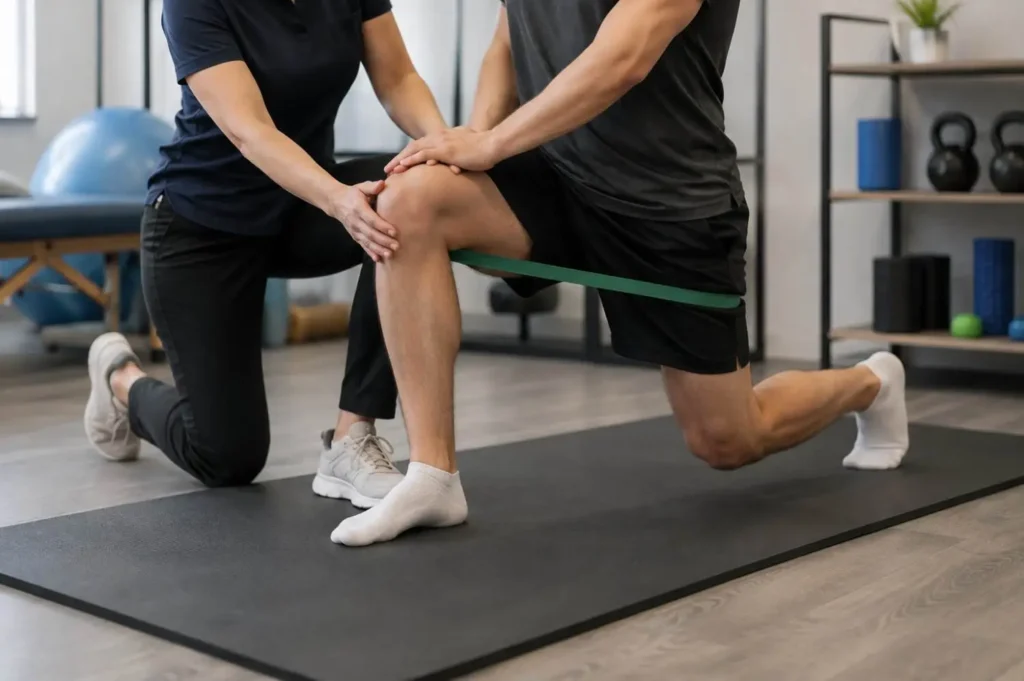
- Hamstring curls – Use a resistance band or a machine.
- Calf raises – Rise onto your toes and lower slowly.
Move slowly and stay in control. Mild muscle tiredness is normal, but sharp joint pain means you should stop. Gentle stretching of the quads, hamstrings, and calves also helps the knee move through its full range.
Protect Your Knees From Injury
A past knee injury is one of the strongest triggers for osteoarthritis, and the damage can show up years after the injury healed. Avoiding injury is one of the most direct ways to protect the joint.
- Warm up for five to ten minutes before exercise or sport.
- Learn safe landing and turning technique if you play football, basketball, or badminton.
- Increase training intensity gradually.
- Avoid deep knee bends under heavy weight. Staying near a 90 degree bend is easier on the joint.
- Stop if you feel sudden knee pain.
If you do hurt your knee, get it assessed and finish your rehabilitation plan. Going back to sport too early often leads to repeat injury.
Wear Supportive Footwear
Your shoes change how force travels through your ankles, knees, and hips. Worn or unsupportive pairs can alter your walking pattern and add strain to the knee.
Choose shoes that fit well, cushion the foot, and support the arch. Running shoes usually need replacing after 500 to 800 kilometers, or sooner if the soles wear unevenly. High heels increase load on the knee, so keep them for short occasions. If you have flat feet or an uneven gait, a podiatrist or physiotherapist can tell you whether insoles would help.
Eat Well for Joint Health
No single food prevents osteoarthritis, but good eating habits help you manage your weight and may ease inflammation. Build meals around vegetables, fruit, whole grains, beans, nuts, and fish. Fatty fish such as salmon and sardines provide omega-3 fats, while dairy, leafy greens, and fortified foods supply calcium. Vitamin D supports bone health. Cut back on sugary drinks, heavily processed foods, and heavy drinking.
Glucosamine and chondroitin are widely sold, but evidence that they prevent cartilage loss is weak. Speak with your doctor before taking any supplement.
Build Better Daily Habits
Small habits protect your knees over time:
- Stand up and move every 30 to 60 minutes if you sit for long periods.
- Use knee pads if your work involves a lot of kneeling.
- Hold the handrail on stairs.
- Lift heavy items by bending at the hips and keeping the load close to your body.
- Get enough sleep, since rest gives your body time to repair tissue.
Know the Early Warning Signs
Early osteoarthritis is easy to miss. Watch for these signs:
- Stiffness after rest or in the morning
- Pain that gets worse with activity
- Swelling around the knee
- A grinding or clicking feeling
- Less movement in the joint
These signs don’t always point to arthritis, but they deserve a check. A doctor may suggest an exam, imaging, physiotherapy, or changes to your activity. Early care can slow the condition and help you stay mobile, while ignoring pain can allow avoidable damage to build.
Frequently Asked Questions
Can knee osteoarthritis be prevented completely?
Not always. Age and genes play a role, but weight control, regular exercise, and injury prevention lower your risk.
Does walking help prevent knee osteoarthritis?
Yes, Regular walking keeps the joint moving and the leg muscles strong, and it is gentle on the knees.
Do glucosamine supplements prevent it?
Evidence is limited. Ask your doctor before using them.
When should I see a doctor about knee pain?
See a doctor if pain, stiffness, or swelling lasts more than a few weeks or gets in the way of daily activity.
Start Protecting Your Knees Today
You can’t change your age or family history, but you can change how much stress your knees carry. Keep your weight in a healthy range, move every day, build leg strength, and treat injuries properly. These habits cost little and work best when you stick with them for years.
If you already have knee pain, stiffness, or swelling that lasts more than a few weeks, book an appointment with a physiotherapist now. Early advice can slow joint damage and keep you moving comfortably.
Disclaimer: This article is for general information only and is not medical advice. It does not replace an exam or treatment from a qualified healthcare professional. If you have knee pain, swelling, or other symptoms, talk to your doctor or physiotherapist before starting a new exercise, diet, or supplement.