Knee joint stability is essential for walking, running, jumping and changing direction. The knee relies on ligaments, menisci, surrounding muscles and coordinated movement to manage these activities.
Although not all knee injuries can be prevented, appropriate strength training and movement-control exercises can reduce the risk of certain injuries, particularly anterior cruciate ligament (ACL) injuries during sports.
This guide explains how knee stability works, common causes of ligament and meniscus injuries, and practical ways to reduce injury risk.
Understanding Knee Joint Stability
The knee connects the thighbone (femur) to the shinbone (tibia). Four major ligaments help support the joint and control movement.
- Anterior cruciate ligament (ACL) – Helps control forward movement and rotation of the shinbone.
- Posterior cruciate ligament (PCL) – Helps limit backward movement of the shinbone.
- Medial collateral ligament (MCL) – Supports the inner side of the knee.
- Lateral collateral ligament (LCL) – Supports the outer side of the knee.
The knee also contains two menisci, which are crescent-shaped pieces of cartilage between the thighbone and shinbone. They help distribute pressure, absorb forces and contribute to joint stability.
The quadriceps, hamstrings, gluteal muscles and calf muscles provide additional support by controlling leg movement. Balance and coordination also help the body respond to changes in direction, speed and surface.
Knee stability depends on all these structures working together. No single exercise or muscle can completely prevent an injury.
Common Causes of Ligament and Meniscus Injuries
Ligament injuries often occur when forces placed on the knee exceed what its supporting tissues can tolerate. Common causes include:
- Sudden stops while running.
- Rapid changes of direction with the foot planted.
- Awkward landings after jumping.
- Pivoting under load.
- Direct impact or collisions during sports.
These movements can place significant stress on the knee, particularly during activities involving rapid acceleration, deceleration and rotation.
Meniscus tears can develop in different ways. Traumatic tears may occur when the knee twists while bearing weight. They can happen alongside ligament injuries. Degenerative tears develop as the meniscus changes with age and may occur during ordinary activities without a major accident.
Normal bending and twisting are not automatically dangerous. Injury risk depends on factors such as the force involved, movement speed, physical conditioning and the condition of the knee.
Strengthen the Muscles That Support the Knee
Strong supporting muscles help control leg movement and manage the forces placed on the knee. Strength training is an important part of knee injury prevention, although stronger muscles cannot guarantee protection from injury.
The main muscle groups to target are:
- Quadriceps: Help straighten the knee and control bending.
- Hamstrings: Support knee control during running and other movements.
- Gluteal muscles: Help control hip movement and thigh position.
- Calf muscles: Help control the lower leg during walking, running and jumping.
Effective Knee-Strengthening Exercises:
| Exercise | Main benefit |
| Controlled squats | Strengthen the quadriceps and gluteal muscles |
| Glute bridges | Develop hip and hamstring strength |
| Step-ups | Improve leg strength and weight-transfer control |
| Calf raises | Strengthen the calf muscles |
| Hamstring exercises | Improve control of lower-limb movement |
Choose exercises suited to your fitness, experience and physical ability. Focus on controlled technique before increasing resistance or difficulty.
Progress gradually as your strength improves. If you have an existing knee injury, persistent pain or instability, consult a qualified healthcare professional before starting a new exercise programme.
Strength exercises are useful, but they should be combined with balance and movement-control training for a more complete injury-prevention approach.
Improve Balance, Landing and Movement Control
Muscle strength is only one part of knee stability. Neuromuscular training helps the body coordinate movement and maintain control during activities that place changing demands on the knee.
Useful exercises and drills include:
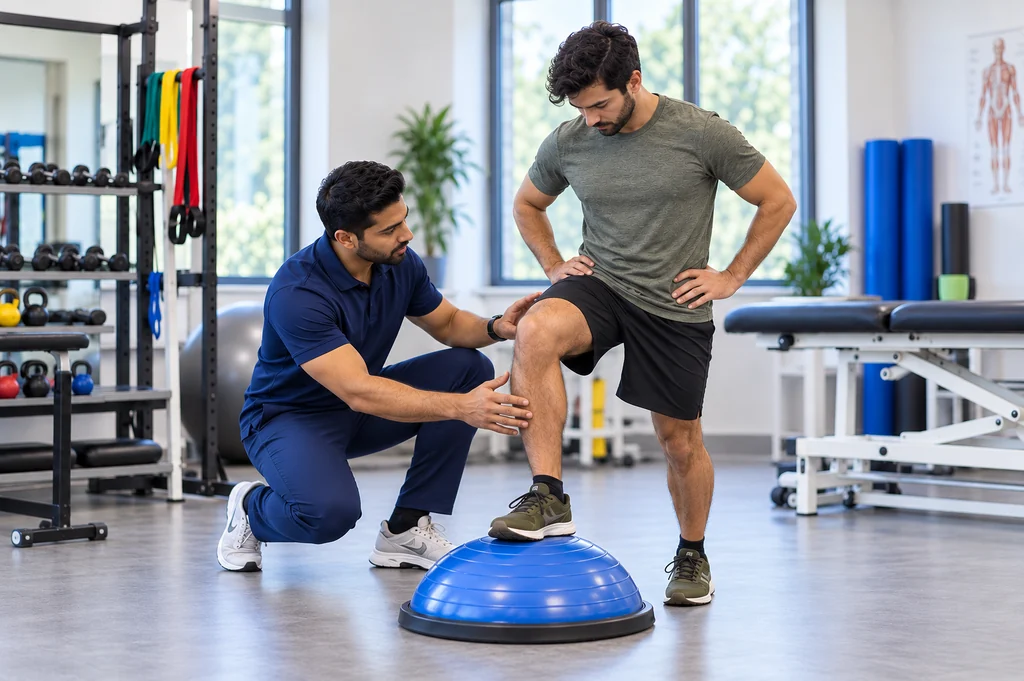
- Single-leg balance – Practise maintaining control while standing on one leg.
- Landing drills – Practise absorbing force through coordinated hip and knee movement.
- Deceleration drills – Improve control when slowing down after running.
- Direction-change drills – Practise changing direction with control before progressing to faster, sport-specific movements.
- Technique feedback – Work with a qualified coach or professional to improve movement patterns.
Landing and deceleration drills are particularly relevant to sports involving jumping, sprinting and sudden changes of direction. Learning to control the body during these movements may help reduce risky movement patterns.
Start with simple exercises and increase the difficulty as your technique and physical capacity improve.
Knee Stability Exercises | Dr. Prachi Shah ELEMENTA
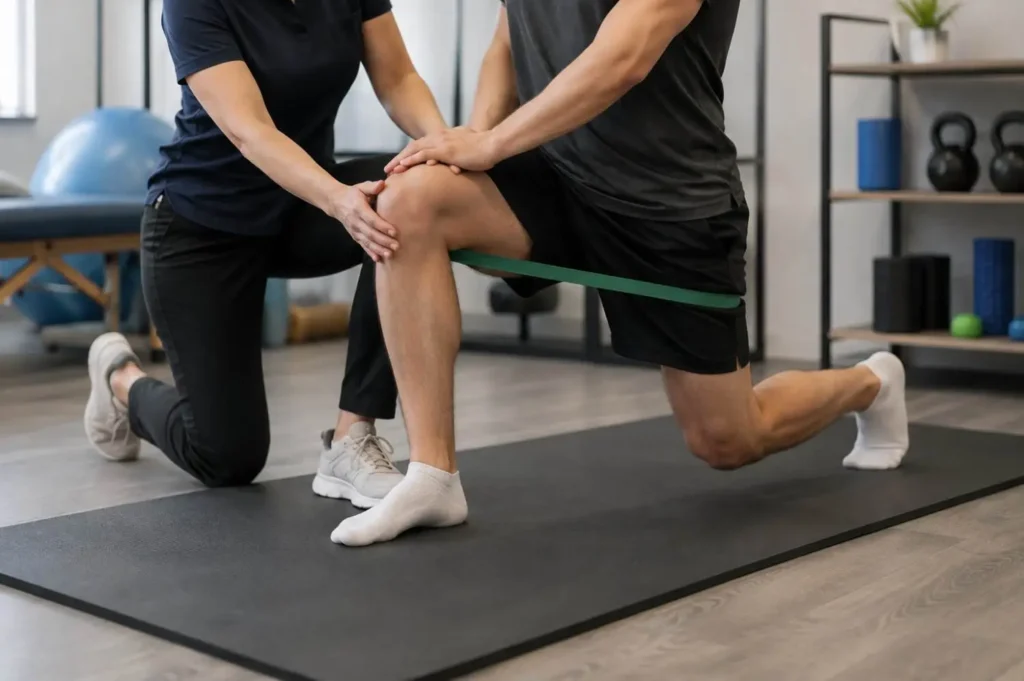
Watch the video below to see how Dr. Prachi Shah’s ELEMENTA team performs balance, resistance-band and lunge exercises for foot, ankle and knee stability, and check your own form against each movement.
What Does the Research Say?
Research supports structured exercise-based programmes for reducing ACL injuries in athletic populations. A 2020 systematic review and meta-analysis found that injury-prevention programmes reduced ACL injury rates in the athletes studied.
A 2023 clinical practice guideline also supports multicomponent prevention programmes that combine strengthening, jumping, agility and movement-technique training.
These findings support using a structured programme rather than relying on one exercise alone. However, evidence for preventing all types of meniscus injuries is more limited, particularly for age-related tears.
Warm Up and Increase Training Gradually
A suitable warm-up prepares your body for the movements and intensity required during exercise. For activities involving running, jumping or pivoting, include:
- Light jogging or another gentle aerobic activity.
- Dynamic movements to prepare the hips, knees and ankles.
- Controlled acceleration and deceleration.
- Progressive jumping and landing drills, where appropriate.
- Sport-specific movements before full-intensity activity.
A structured warm-up can combine strength, agility, jumping and technique practice. Consistency is important, particularly for athletes who regularly perform high-demand movements.
Training intensity should also increase gradually. Sudden increases in running distance, jumping frequency, resistance or playing time may exceed your current physical capacity.
Other useful habits include:
- Allowing adequate recovery between demanding sessions.
- Adjusting activity when fatigue affects coordination.
- Wearing footwear appropriate for the activity and playing surface.
- Adapting training to your current fitness and experience.
There is no single warm-up, shoe or training schedule that guarantees injury prevention. The most suitable approach depends on the activity, individual needs and programme.
Everyday Habits That Support Knee Health
Regular physical activity helps maintain muscle strength and the physical capacity needed for everyday movement. Suitable activities may include walking, cycling and resistance training, depending on your health and ability.
To support knee health:
- Maintain a regular, progressive strength-training routine.
- Build up to demanding sports rather than suddenly increasing intensity.
- Allow enough recovery after strenuous activity.
- Seek professional guidance if a previous injury affects your movement or stability.
People returning to sport after a knee injury may need an individual rehabilitation and progression plan. Previous injuries, persistent symptoms and current limitations can affect which exercises are appropriate.
These habits support physical function, but they cannot eliminate the risk of traumatic injuries or age-related meniscus tears.
When Should You Seek Medical Assessment?
Do not rely on strengthening exercises alone if you develop symptoms after a knee injury. Seek prompt medical assessment if you experience:
- Significant or rapidly developing swelling.
- Severe pain or difficulty bearing weight.
- New instability or a feeling that the knee is giving way.
- Locking that prevents normal movement.
- Difficulty straightening the knee after an injury.
These symptoms may indicate an injury that requires further evaluation. Being able to walk does not rule out ligament or meniscus damage. Seek urgent care if symptoms are severe or you cannot safely stand or walk.
Build Stronger Knees for Better Movement
Knee joint stability relies on healthy supporting tissues, strong muscles and coordinated movement. Strength training, balance exercises, controlled landing, suitable warm-ups and gradual training progression can help reduce the risk of certain injuries, particularly ACL injuries in sports.
The most effective approach is consistent, appropriate training that matches your activity and physical ability. While injury-prevention programmes can reduce risk, they cannot eliminate every ligament or meniscus injury.
Protect Your Knees with Expert Care!
Dr. Prachi Shah and her experienced physiotherapy team offer personalised rehabilitation and sports physiotherapy to help improve knee strength, stability and movement. Book your appointment today.
Medical disclaimer: This article is for educational purposes only and does not replace professional medical advice, diagnosis or treatment. Consult a qualified healthcare professional if you have a knee injury or ongoing symptoms.