Bow legs and knock knees are two common ways the legs line up at the knees. In young children, they are usually a normal stage of growth. In older children and adults, they can point to a bone or joint problem, or add strain to the knee over time. This guide explains the causes, what is normal at each age, and when to see a physiotherapist or doctor.
What the Terms Mean
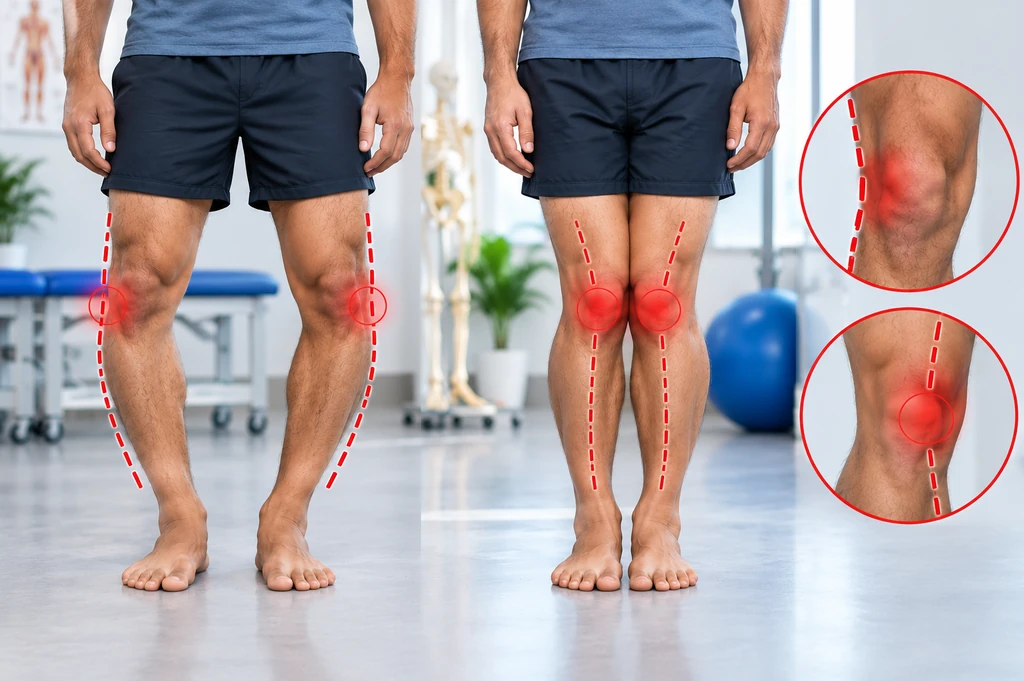
With bow legs (genu varum), the knees stay apart when the ankles touch. With knock knees (genu valgum), the knees touch while the ankles stay apart. Both depend on how the thigh bone and shin bone line up at the knee.
What Is Normal at Each Age
Babies are born with bowed legs, and the bowing is most visible once they start walking. It usually eases by about age 3. Between ages 2 and 5, many children look knock-kneed, and most legs straighten by age 7 or 8. A bowed toddler or a knock-kneed five-year-old is usually growing along a typical path.
Causes in Children
Normal growth is the most common cause, and family history can play a part. Other causes are less common but matter more:
- Rickets – Low vitamin D, calcium, or phosphate softens growing bones and can bend the legs.
- Blount’s disease – A growth disorder near the top of the shin bone that causes bowing that gets worse instead of better.
- Injury or infection – Damage to a growth plate can make one side of a bone grow faster than the other.
- Excess body weight – Extra load on growing legs is linked with both patterns.
Flat feet often appear alongside knock knees, though doctors do not fully agree on whether one causes the other.
Causes in Adults
Some adults carry a childhood pattern forward. Others develop it after a fracture that healed in a poor position, a growth plate injury, or osteoarthritis wearing down one side of the knee.
Alignment changes where force lands inside the joint. Bowed legs tend to load the inner side of the knee, and knock knees tend to load the outer side and the kneecap. Over many years, this uneven load, especially with extra body weight, may add to pain and wear. Weak hip and thigh muscles can also change how the knee moves during walking and stairs, even when the bones are not the problem.
When to Get Help
For children, see a doctor if:
- Bow legs last beyond age 3 or are getting worse
- Knock knees continue past age 7 or 8, or appear before age 2
- Only one leg is affected, or the curve is severe
- There is pain, limping, or avoidance of activity
For adults, get checked if you have knee, hip, or ankle pain, alignment that is changing, or stiffness and swelling lasting more than a few weeks.
Seek urgent care if sudden pain stops you from putting weight on the leg, or if a joint becomes hot, red, and swollen with fever.
How It Is Diagnosed
A clinician examines the legs, checks knee movement, and watches you walk. They also ask about pain, past injuries, and when the change began. An X-ray can show bone alignment, and blood tests may be used if a vitamin or mineral deficiency is suspected. Not everyone needs these tests.
What a Physiotherapist Can and Cannot Do
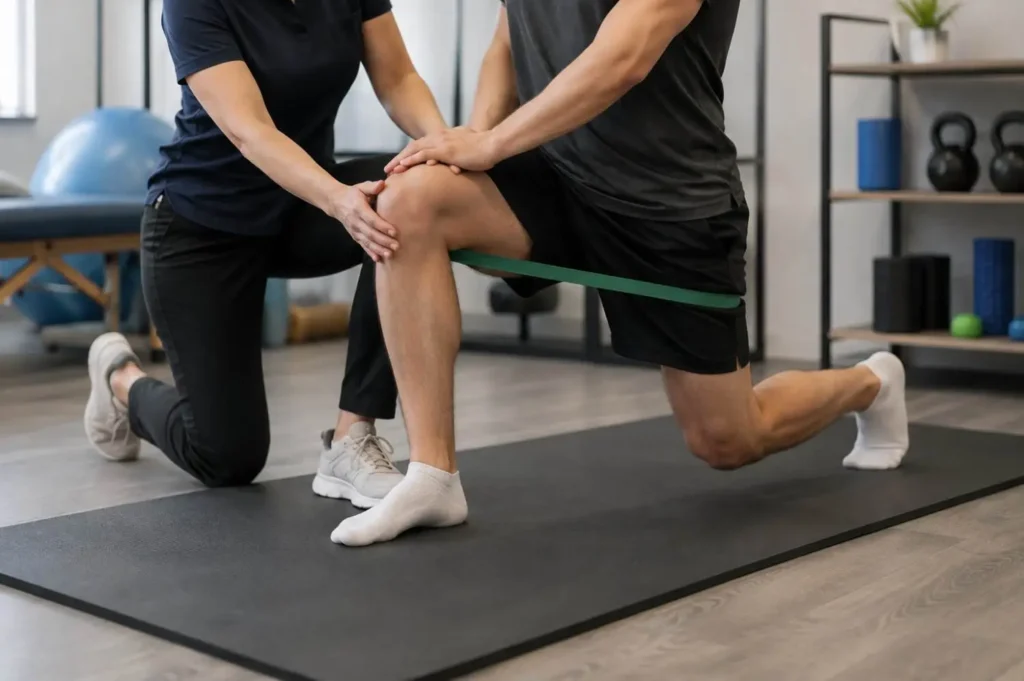
A physiotherapist can assess how you stand and walk, then build a plan around weak muscles and movement habits that strain the knee, hip, or foot. This usually includes strengthening, balance work, walking retraining, and advice on activity and footwear. After corrective surgery, physiotherapy also supports recovery.
There are limits. Physiotherapy cannot reliably straighten a fixed bone deformity. For young children with normal growth patterns, exercises, splints, and shoe inserts have not been shown to change how the legs develop. Structural problems need a doctor or orthopaedic specialist.
Frequently Asked Questions
1. At what age do knock knees go away?
Most children outgrow them by age 7 or 8. If they remain after that, or are severe, get them checked.
2. Are bow legs normal in toddlers?
Yes, Most babies have some bowing, and it usually improves by about age.
3. Can exercise fix knock knees?
Exercise cannot reshape bone, but it can build strength and ease pain, mainly in older children and adults.
4. Can adults get bow legs or knock knees?
Yes, Osteoarthritis, old injuries, and untreated childhood conditions are common reasons.
5. Do bow legs lead to knee arthritis?
Not always. Pronounced bowing puts more load on the inner knee, which may raise the chance of wear over time. Many people with mild bowing have no problems.
6. Should I see a physiotherapist or an orthopaedic doctor?
See a doctor first for new or worsening deformity, or if a bone condition is possible. A physiotherapist helps with strength, movement, and pain.
Get It Checked Early
Most bow legs and knock knees are a normal part of growing up. The ones that need attention last longer than expected, affect one side, get worse, or cause pain. A simple assessment tells you whether to watch and wait or start treatment.
Concerned about bow legs or knock knees? At Prachi Shah Physiotherapy, get personalised guidance to improve movement, manage knee pain, and support better mobility. Book an appointment today for an assessment tailored to your needs.