Returning to sport after an injury can be exciting, but getting back too quickly may increase the risk of setbacks or reinjury. Feeling better is encouraging, but it does not always mean your body is ready for full training or competition.
A safe Return to Sport After Injury should be gradual and based on functional recovery. Strength, mobility, balance, coordination and sport-specific ability all need to be considered. A physiotherapist can help assess your progress and develop a structured Return to Training After Injury plan based on your injury, sport and individual goals.
What Does "Return to Sport" Actually Mean?
Returning to sport is not a single step. It usually involves several stages:
- Performing everyday activities comfortably
- Returning to general exercise
- Starting sport-specific training
- Returning to full practice
- Progressing toward competition
An athlete may be ready for one stage but not the next. For example, being able to walk without pain does not necessarily mean that you are ready to sprint, jump, or change direction during a competitive game.
8 Signs You May Be Ready to Return to Sport
1. You Can Perform Daily Activities Without Significant Pain
Before returning to demanding training, you should generally be able to perform normal activities comfortably. Depending on your injury, this may include walking, climbing stairs, sitting, standing, or performing basic movements.
The exact requirements vary according to the injury and sport. Pain-free daily activity is a positive sign, but it is only one part of the overall assessment.
2. Your Range of Motion Has Improved
Injuries can sometimes cause stiffness or reduced joint movement. Before returning to sport, you need sufficient range of motion for the movements your activity requires.
Your physiotherapist may assess:
- Joint mobility
- Movement symmetry where appropriate
- Sport-specific movement requirements
- Comfortable movement through the required range
Restricted movement can affect technique and may cause you to compensate with other parts of your body.
3. You Have Regained Adequate Strength
Strength is an important part of Sports Injury Rehabilitation. Depending on the injury, rehabilitation may focus on general muscle strength, core strength, single-leg strength or sport-specific strength.
For example, a runner recovering from a leg injury may need sufficient strength to tolerate repeated loading, while a football player may require strength for sprinting, jumping and changing direction.
Your strength requirements should be based on your injury and sport rather than a universal number.
4. You Can Perform Functional Movements With Good Control
Being able to complete an exercise is different from performing it with good movement quality.
Your rehabilitation may gradually include:
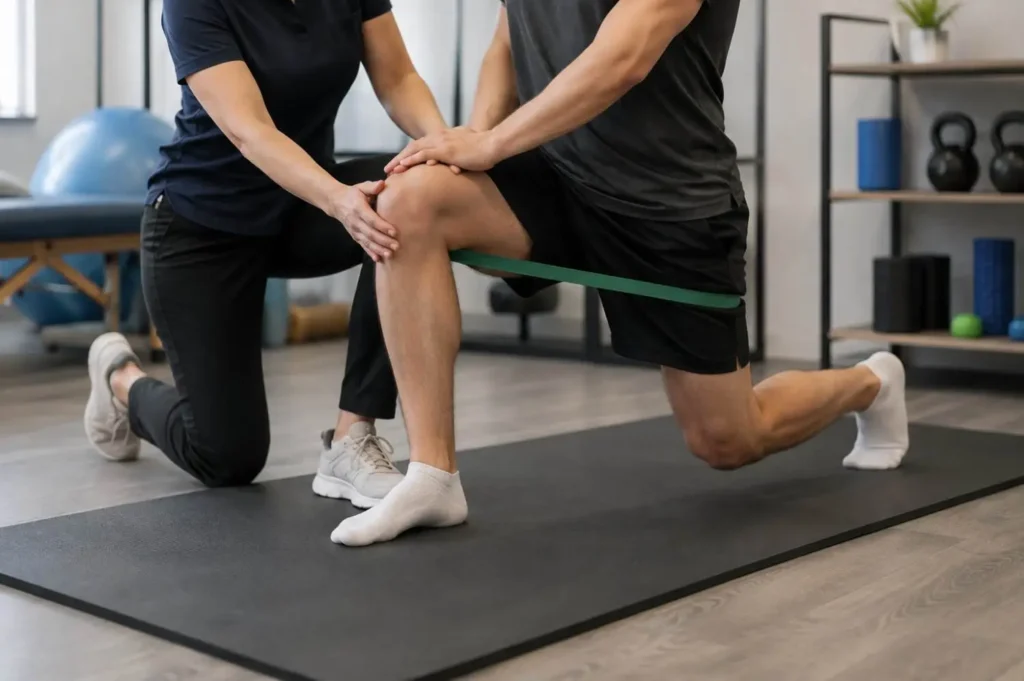
- Squatting
- Lunging
- Jumping
- Landing
- Running
- Changing direction
The goal is to rebuild movement control and confidence before progressing to more demanding activities.
5. Your Balance and Coordination Have Improved
Balance and coordination are particularly important for athletes involved in running, jumping, and rapid changes of direction.
Rehabilitation may include:
- Single-leg balance
- Proprioception exercises
- Dynamic stability training
- Coordination drills
Good balance helps you control your body during movement and respond to changes in your environment.
6. You Can Complete Sport-Specific Drills
A successful Return to Sport requires progression from basic rehabilitation exercises to movements that closely resemble your sport.
Depending on the activity, this may include:
- Running drills
- Agility exercises
- Change-of-direction drills
- Throwing
- Jumping
- Sport-specific movements
Intensity and complexity should generally increase gradually. Your ability to perform these drills comfortably and with good control can provide useful information about your readiness.
7. Your Body Tolerates Training Without a Significant Symptom Flare-Up
Don’t judge your recovery only by how you feel during exercise. Pay attention to how your body responds afterwards.
Monitor:
- Symptoms during training
- Symptoms later the same day
- Symptoms the following day
- Swelling or unusual soreness
- Recovery between sessions
If symptoms consistently increase after training, your rehabilitation or training load may need to be adjusted.
8. You Have Been Assessed for Your Level of Activity
Professional assessment can be particularly valuable after major injuries, surgery, ligament injuries, fractures or recurring injuries. A physiotherapist can bring together everything covered above- strength, mobility, balance, movement control and sport-specific readiness- into one clear picture. Not every athlete requires formal medical clearance, but an assessment can help you understand whether your body is prepared for the demands of your particular sport.
How Sports Physiotherapy Supports Return to Sport
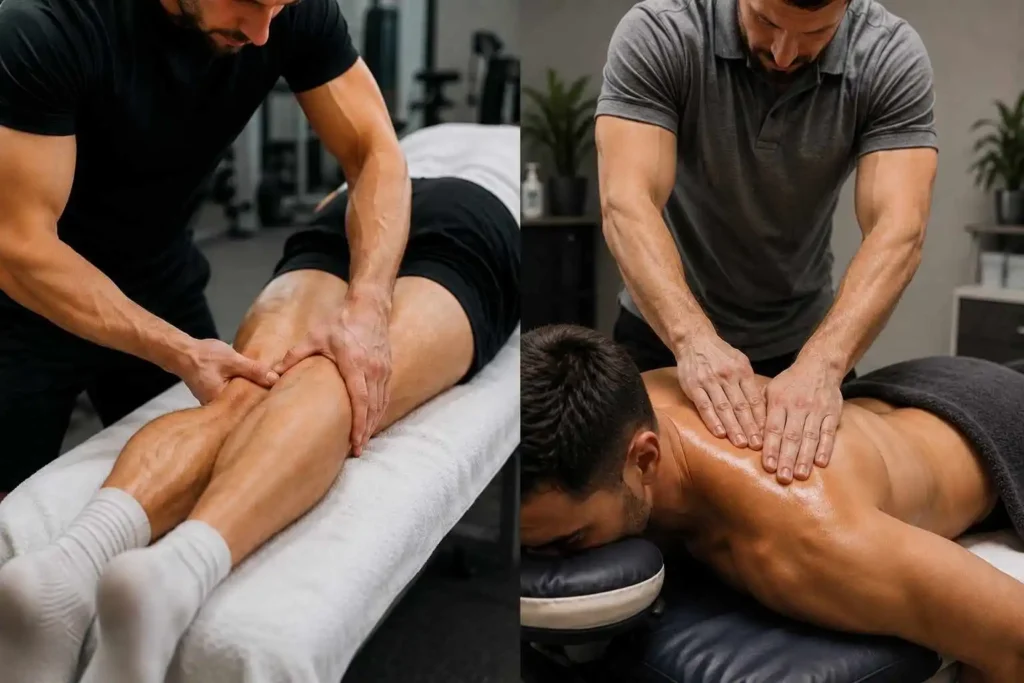
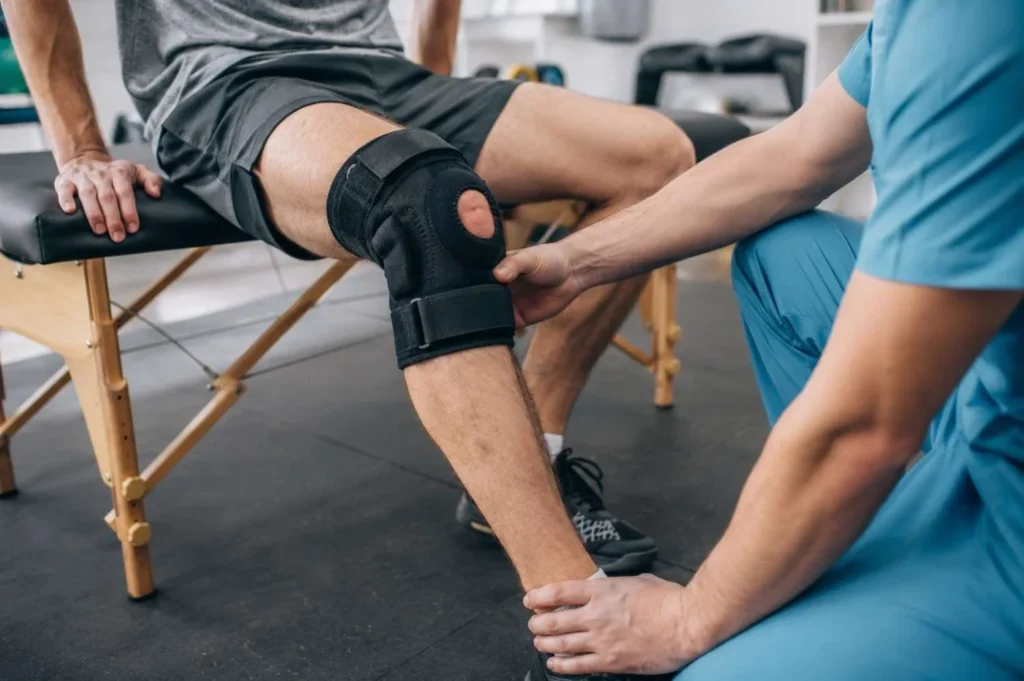
Sports Physiotherapy can play an important role throughout the rehabilitation process. Treatment may include:
- Injury assessment
- Mobility restoration
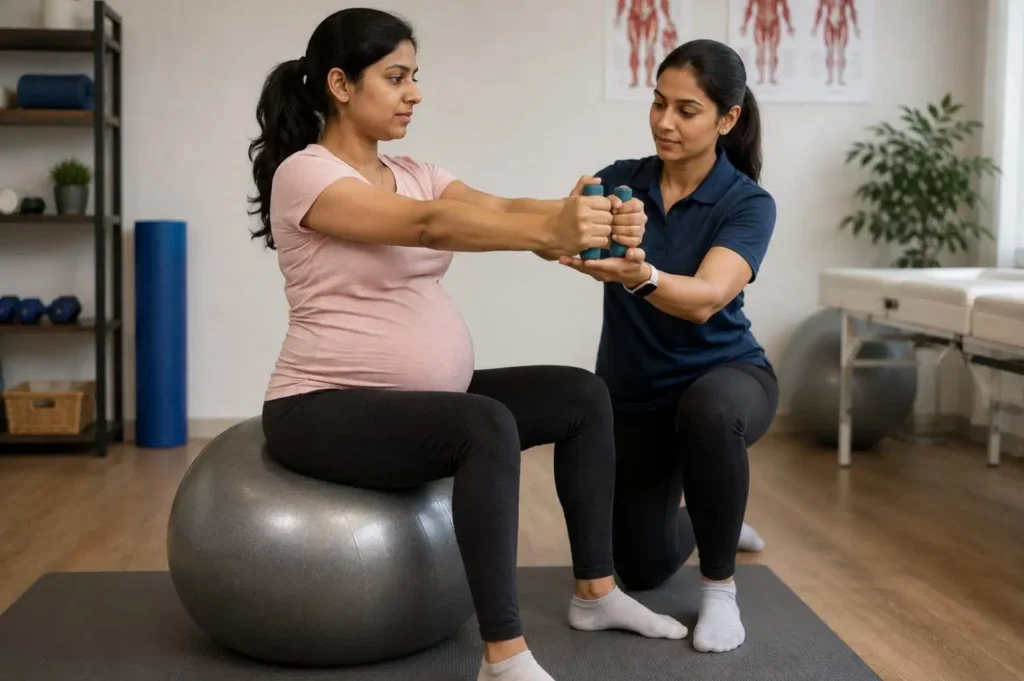
- Strengthening
- Balance and proprioception training
- Movement retraining
- Functional testing
- Sport-specific rehabilitation
- Training-load progression
- Injury prevention strategies
At each stage, the rehabilitation program can be adjusted according to the athlete’s progress and goals.
Why Choose Dr. Prachi ELEMENTA Physiotherapy Centre?
At Dr. Prachi ELEMENTA Physiotherapy Centre, Mumbai, rehabilitation is individualized according to the patient’s condition, activity level, and recovery goals.
Dr. Prachi Shah has 18+ years of experience in physiotherapy, with expertise in Sports Physiotherapy, Sports Rehabilitation, Gait Analysis, Pedobarography/Foot Pressure Analysis, Aquatic Therapy, exercise-based rehabilitation, and functional assessment.
The focus is on helping athletes progressively rebuild their physical capacity rather than promising a fixed recovery timeline.
Testimonial from - Dr. Prachi ELEMENTA Physiotherapy Centre
Did my rehab after a tibia break. It went well. Got me back to sport in no time.
Rohit Mirza - Former Football Player in Kerala Team
Frequently Asked Questions
1. How do I know if I am ready to return to sport after an injury?
You should be able to perform appropriate daily and sport-specific activities with suitable strength, mobility, balance and movement control. Professional assessment can help determine readiness.
2. How long does it take to return to sport after an injury?
There is no universal timeline. Recovery depends on the injury, severity, treatment, sport and individual progress.
3. Can I return to sports if I still have mild pain?
Mild symptoms should not automatically be ignored. The significance of pain depends on the injury and activity, so consult your physiotherapist if symptoms persist.
4. When can I start running after an injury?
Running should generally be reintroduced progressively when your injury-specific rehabilitation has reached an appropriate stage. A physiotherapist can help determine a suitable progression.
5. Should I see a physiotherapist before returning to sports?
Professional assessment can be particularly useful after significant injuries, surgery, recurring injuries or when you are unsure about your readiness.
6. Where can I get sports injury rehabilitation in Mumbai?
You can consult Dr. Prachi ELEMENTA Physiotherapy Centre in Mumbai for individualized sports physiotherapy and rehabilitation.