Spine surgery may be recommended to address certain spinal conditions, nerve compression, instability, or other problems affecting movement and daily life. However, recovery does not end when the procedure is completed. Many patients experience stiffness, weakness, fatigue, reduced mobility, or difficulty returning to normal activities during the post-operative period.
Physiotherapy after spine surgery can support gradual recovery by improving movement, strength, posture, balance, and functional independence. The rehabilitation process is different for every patient and depends on the type of surgery, surgical findings, healing progress, symptoms, general health, and the surgeon’s instructions. A qualified physiotherapist works alongside the medical team to develop a safe and individualized rehabilitation plan.
Why Is Physiotherapy Important After Spine Surgery?
Post-surgery spine rehabilitation helps patients regain confidence and learn how to move safely during recovery. Depending on the procedure and stage of healing, physiotherapy may help to:
- Restore safe and controlled movement
- Improve mobility and flexibility where appropriate
- Rebuild strength after reduced physical activity
- Improve posture and body mechanics
- Develop confidence with everyday movements
- Increase walking and activity tolerance gradually
- Support a safe return to work, exercise, or sport when medically appropriate
The goals of physiotherapy for spine recovery vary. A patient recovering from spinal decompression may have different rehabilitation needs from someone who has undergone spinal fusion or instrumentation. Therefore, treatment should never follow a standard routine without considering the individual’s surgical precautions.
What to Expect During Spine Surgery Rehabilitation
1. Initial Assessment and Recovery Planning
The first physiotherapy session usually involves a detailed assessment and discussion about the patient’s surgery and current condition. The physiotherapist may review:
- Type and date of surgery
- Surgeon-provided precautions and restrictions
- Pain, numbness, or other symptoms
- Mobility and functional limitations
- Muscle strength and balance
- Walking ability
- Difficulty with sitting, standing, or changing positions
- Daily activity requirements and recovery goals
This information helps the physiotherapist create a rehabilitation plan suited to the patient’s healing stage. The plan may be adjusted regularly based on symptoms, progress, medical advice, and functional needs.
2. Early Recovery and Gentle Movement
When rehabilitation is cleared by the surgeon or medical team, early treatment may focus on safe movement and basic functional activities. These may include bed mobility, position changes, walking practice, gentle movement activities, breathing exercises when appropriate, and education about spinal precautions.
Patients may also learn how to get in and out of bed, sit, stand, walk, and perform basic daily tasks while placing less stress on the healing area. The timing and type of activity depend on the surgery and should be guided by the treating professionals.
3. Progressive Strength and Mobility Training
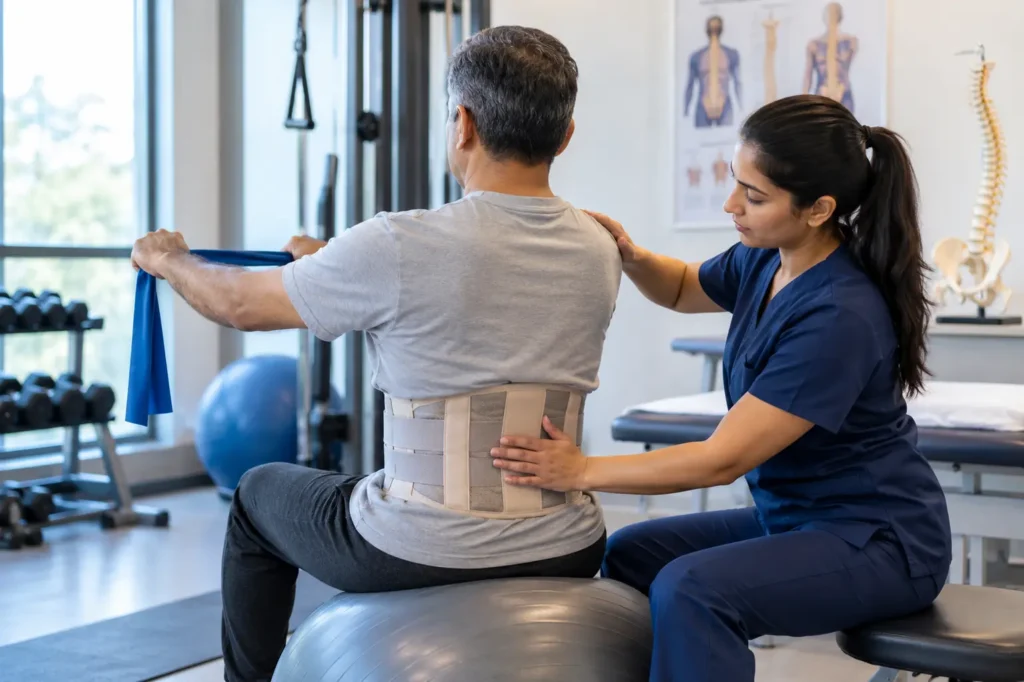
As healing progresses, physiotherapy may gradually include exercises and activities designed to improve strength, mobility, posture, balance, and coordination. Depending on the patient’s condition, rehabilitation may involve:
- Core and trunk strengthening when appropriate
- Hip and lower-limb strengthening
- Postural control exercises
- Balance training
- Functional movement practice
- Walking progression
- Education about body mechanics
Exercises should be progressed according to healing, symptoms, surgical restrictions, and functional tolerance. Patients should not begin strenuous back surgery recovery exercises without approval from their surgeon or physiotherapist.
4. Returning to Daily Activities
A major goal of lumbar spine surgery rehabilitation or cervical spine surgery rehabilitation is helping patients return to everyday activities safely.
Physiotherapy may support gradual progress towards:
- Walking longer distances
- Sitting and standing more comfortably
- Climbing stairs
- Performing household activities
- Managing work-related tasks
- Returning to exercise or sport after clearance
Recovery timelines vary significantly. Comparing progress with another patient may create unnecessary worry because different procedures, health conditions, and healing responses can affect recovery.
Which Factors Affect Recovery After Spine Surgery?
Several factors can influence spinal surgery recovery, including:
- Type of spinal procedure
- Whether fusion or instrumentation was performed
- Surgical precautions and restrictions
- Overall health and fitness
- Age and physical condition
- Pre-existing muscle weakness
- Pain or nerve-related symptoms
- Consistency with the prescribed rehabilitation plan
- Sleep, nutrition, and general recovery habits
- Regular follow-up with the surgeon
Patients should remember that recovery is not solely dependent on exercise or personal effort. Healing is influenced by medical, surgical, physical, and individual factors.
Common Challenges During Spine Surgery Recovery
Some patients may experience back or neck stiffness, muscle weakness, reduced walking tolerance, difficulty changing positions, fatigue, fear of movement, or reduced confidence with daily activities.
Education, graded activity, appropriate exercises, and professional supervision may help patients manage these challenges. However, persistent, worsening, or unusual symptoms should always be discussed with the treating medical team rather than ignored.
Warning Signs During Recovery
Contact your surgeon or healthcare provider if you experience increasing or severe pain, new or worsening weakness, numbness or tingling, fever, wound discharge, unusual redness, sudden decline in mobility, or calf pain or swelling.
New bladder or bowel dysfunction, rapidly worsening weakness, chest pain, or sudden breathlessness require urgent medical attention. These symptoms do not always indicate a specific complication, but they should not be ignored.
Book an appointment with Dr. Prachi Shah at Dr. Prachi ELEMENTA Physiotherapy Centre to discuss your spine rehabilitation needs and create an individualized recovery plan.