Pregnancy and the months after childbirth bring major physical changes. As the body adapts during pregnancy and recovers after delivery, women may experience back pain, pelvic discomfort, stiffness, muscle weakness, posture changes and difficulty with everyday movements. Prenatal and postnatal physiotherapy can provide individualized guidance to support comfortable movement, strength and functional recovery.
There is no single exercise plan that is appropriate for every woman. Your program should consider your stage of pregnancy or postpartum recovery, symptoms, medical history, fitness level, type of delivery and personal goals. Always consult your obstetrician or qualified healthcare professional before starting a new exercise program.
What Is Prenatal and Postnatal Physiotherapy?
Prenatal physiotherapy supports women during pregnancy by assessing posture, movement, mobility, strength, balance and functional activities. A physiotherapist can recommend suitable exercises and movement modifications according to the stage of pregnancy.
Postnatal physiotherapy focuses on recovery after childbirth. Depending on individual needs, it may address reduced strength, posture, pelvic floor function, abdominal muscle recovery, back or pelvic discomfort and difficulties returning to normal daily activities or exercise.
The aim is not simply to exercise more. It is to help women understand their changing bodies and return to movement progressively and confidently.
Why Is Physiotherapy Important Before and After Childbirth?
When medically appropriate, physical activity and individualized physiotherapy can help maintain strength and mobility during pregnancy and support recovery after delivery. Prenatal guidance can also help women prepare physically for changing demands, while postnatal rehabilitation can help rebuild strength and functional capacity.
A personalized program may focus on:
- Maintaining strength, mobility and comfortable movement during pregnancy
- Supporting posture as the body changes
- Managing common back and pelvic discomfort
- Preparing the body for the physical demands of childbirth and motherhood
- Gradually rebuilding strength after delivery
- Supporting abdominal and pelvic floor recovery
- Returning to daily activities and exercise progressively
Prenatal Physiotherapy: How It Can Support You During Pregnancy
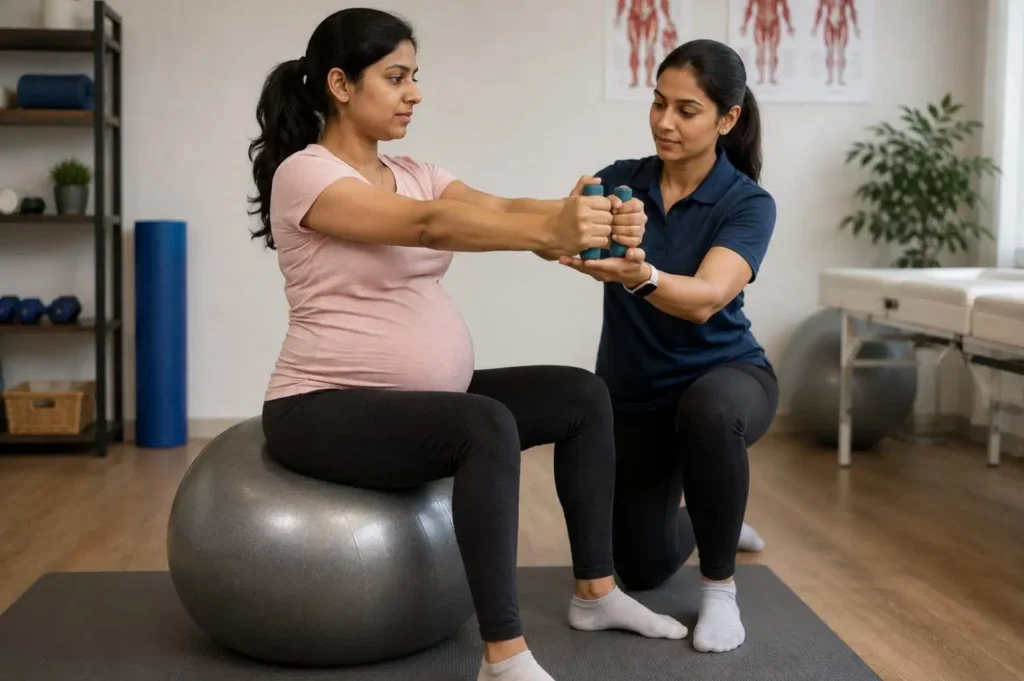
Prenatal physiotherapy can be adapted to each trimester and the woman’s individual condition. It may include gentle mobility work, breathing exercises, strengthening, posture education and functional movement training.
The clinic team also recommends discussing specific goals around childbirth with your obstetrician and physiotherapist. A suitable exercise program may support physical preparation for delivery and help women remain active, but no exercise program can guarantee an easy delivery.
Appropriate prenatal rehabilitation may also support recovery from diastasis recti. Any abdominal separation should be assessed individually rather than treated with a generic exercise routine.
Safe Prenatal Exercises by Trimester
First Trimester – Gentle Strength and Mobility
Fatigue and nausea may affect exercise tolerance. If your healthcare provider has cleared you for exercise, examples may include walking at a comfortable pace, gentle pelvic mobility, breathing exercises, light bodyweight strengthening and gentle stretching.
Second Trimester – Strength, Mobility and Stability
As the abdomen grows, balance and posture may change. Depending on individual needs, exercises may include walking, prenatal squats, pelvic tilts, modified strengthening, gentle hip mobility and pelvic floor exercises. Positions and resistance may need to be modified as pregnancy progresses.
Third Trimester – Mobility, Comfort and Functional Preparation
The focus often shifts toward comfort, mobility and functional preparation. Gentle walking, breathing exercises, pelvic mobility, stretching, supported squats and sit-to-stand movements may be appropriate when cleared and comfortable. Pelvic floor strengthening and relaxation can be guided by a qualified physiotherapist.
Postnatal Physiotherapy: Supporting Recovery After Childbirth
After delivery, the body needs time and appropriate progression to recover. Postnatal physiotherapy can help women address changes in strength, posture, mobility and pelvic floor function and gradually return to everyday activities and exercise.
Depending on the individual’s assessment, rehabilitation may include breathing and relaxation work, pelvic floor strengthening and coordination, abdominal and core rehabilitation, posture guidance, mobility exercises, progressive strengthening and functional training.
Postnatal recovery is also an important time to pay attention to emotional wellbeing. Physiotherapy and appropriate physical activity may form one part of a broader recovery plan for women experiencing post-partum depression, but mental health symptoms should always be discussed with an appropriate healthcare or mental health professional.
Pelvic Floor and Diastasis Recti Recovery
The pelvic floor muscles support pelvic organs and contribute to bladder and bowel control and pelvic function. After pregnancy and childbirth, some women may benefit from individualized pelvic floor strengthening, coordination and relaxation exercises.
Diastasis recti, or separation of the abdominal muscles, can also occur during and after pregnancy. Recovery should be individualized, with exercises progressed according to symptoms, abdominal function and overall recovery rather than following a one-size-fits-all routine.
Aquatic Therapy During Pregnancy and Recovery
For some women, water-based rehabilitation can provide a low-impact way to work on movement and strength. The buoyancy of water can reduce load through weight-bearing joints and may make certain movements more comfortable. Suitability depends on individual health, pregnancy or postpartum status and medical advice, so aquatic therapy should be discussed with your healthcare provider and physiotherapist.
When Should You Seek Professional Guidance?
An assessment is particularly useful if you have persistent or worsening pain, pelvic discomfort, weakness, difficulty returning to normal activities, concerns about pelvic floor function, abdominal separation, or difficulty progressing your exercise routine.
- Persistent back or pelvic pain
- Difficulty walking, standing or performing daily activities
- Significant weakness or loss of function
- Concerns about pelvic floor control
- Abdominal weakness or suspected diastasis recti
- Pain or problems when returning to exercise
Frequently Asked Questions
1. Is prenatal physiotherapy safe during pregnancy?
It can be appropriate when exercises are selected according to the woman’s health, pregnancy stage and medical history. Consult your obstetrician and physiotherapist before starting a new program.
2. When should I start prenatal physiotherapy?
There is no universal starting point. Some women seek guidance early in pregnancy, while others consult a physiotherapist when pain, stiffness or movement difficulties develop.
3. Can physiotherapy help with pregnancy back pain?
An individualized physiotherapy program may help manage pregnancy-related back discomfort through assessment, exercise modification, mobility work, strengthening and movement education.
4. Can postnatal physiotherapy help after childbirth?
Postnatal physiotherapy can support recovery of strength, mobility, pelvic floor function and everyday movement, with progression based on the individual’s condition and delivery recovery.
5. Can physiotherapy help with diastasis recti?
A physiotherapist can assess abdominal function and develop an individualized exercise program. Recovery varies between women and should not rely on a generic routine.
6. Can pelvic floor exercises be done during pregnancy and after delivery?
They may be appropriate, but both strengthening and relaxation can be important. Individual guidance is useful, particularly when symptoms or pelvic discomfort are present.
7. Can physiotherapy help with post-partum depression?
Physical activity and physiotherapy may be one part of a broader recovery plan, but post-partum depression requires appropriate medical or mental health support. Speak with your healthcare provider if you have symptoms.
8. Is aquatic therapy suitable during pregnancy?
For some women, water-based exercise can be a comfortable low-impact option. Suitability should be confirmed with the obstetrician and physiotherapist.
9. When should I stop exercising during pregnancy?
Stop exercising and seek medical advice for symptoms such as vaginal bleeding, fluid leakage, severe pain, chest pain, dizziness or fainting, severe breathlessness, regular painful contractions, calf swelling or pain, or any unusual symptom that concerns you.
10. Where can I get prenatal and postnatal physiotherapy in Mumbai?
Women looking for individualized prenatal and postnatal physiotherapy in Mumbai can contact Dr. Prachi ELEMENTA Physiotherapy Centre for an assessment and rehabilitation plan.