

Heel pain is a common problem that can affect walking, standing, running, and exercise. Plantar fasciitis is one common cause, but it is not the only one. Heel pain may also result from Achilles tendon problems, stress injuries, nerve irritation, heel fat pad problems, bursitis, muscle tightness, unsuitable footwear, or changes in activity.
Because different causes can require different approaches, persistent or recurring heel pain should be assessed by a qualified physiotherapist or doctor.
What Is Plantar Fasciitis?
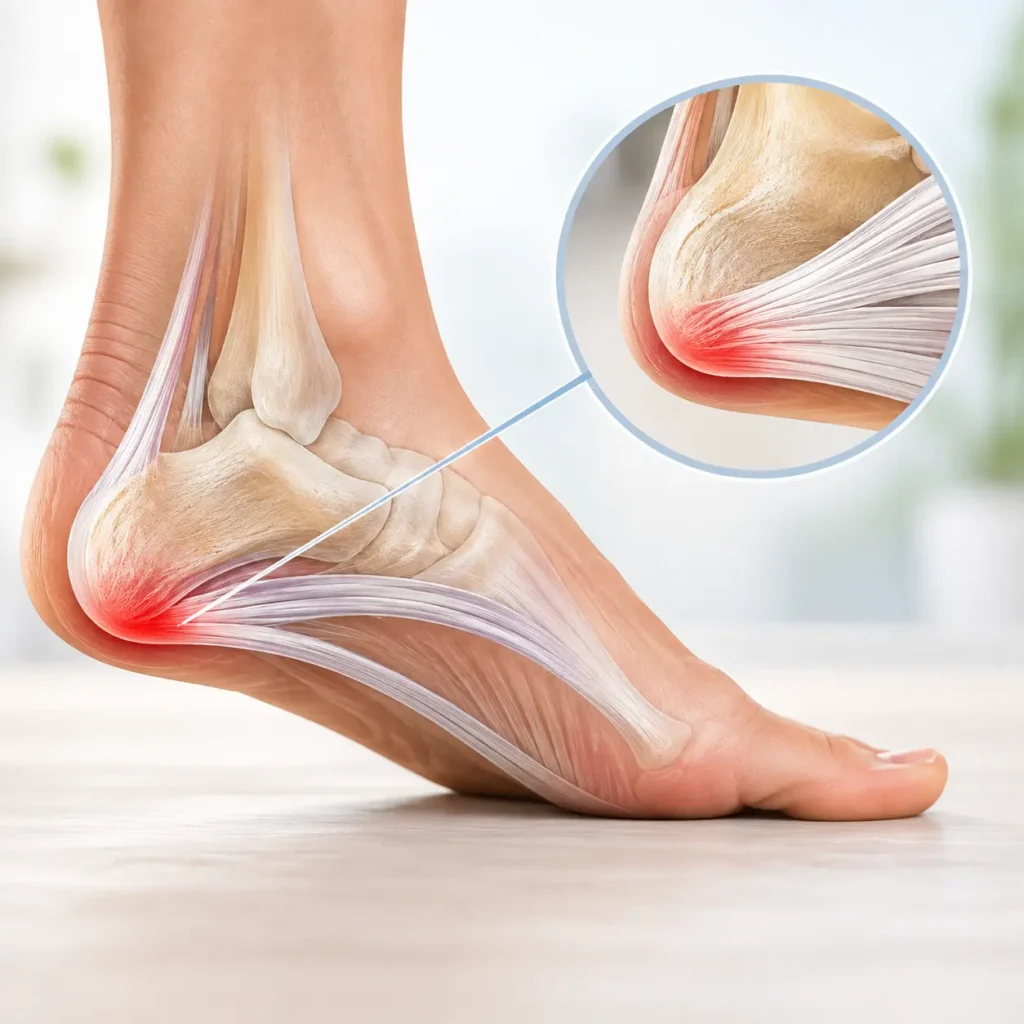
The plantar fascia is a strong band of connective tissue running along the bottom of the foot. It supports the foot’s arch and helps absorb stress during standing and walking.
Plantar fasciitis involves irritation and pain around the plantar fascia, commonly near the underside or inner part of the heel. A typical symptom is pain during the first few steps after waking up or after sitting for a long time. It may ease with gentle movement and return after prolonged standing, walking, or exercise.
What Is Heel Pain?

Heel pain is a symptom rather than a specific diagnosis. It describes discomfort in or around the heel and can have several causes. The location and pattern of pain can provide useful clues, but they cannot confirm the cause on their own. A clinical assessment helps determine the likely source.
Causes of Plantar Fasciitis
Plantar fasciitis develops when the plantar fascia, a strong band of connective tissue running along the bottom of the foot, is exposed to excessive or repeated loading. Factors that may contribute include:
- Prolonged walking, standing, running, or exercise can place repeated stress on the plantar fascia.
- Rapidly increasing walking, running, or exercise can overload the tissue.
- Changes in foot posture or gait may affect how load is distributed through the foot.
- Reduced flexibility may increase stress on the plantar fascia.
Causes of Heel Pain
Heel pain is a symptom rather than a specific diagnosis. Unlike plantar fasciitis, which involves the plantar fascia, heel pain can result from several different conditions.
Possible causes include:
- Irritation or problems affecting the Achilles tendon can cause pain around the back of the heel.
- Irritation or thinning of the heel’s natural cushioning can cause pain underneath the heel.
- Inflammation or irritation of a bursa around the heel can contribute to discomfort.
- Repetitive loading can cause injury to the heel bone.
Symptoms of Plantar Fasciitis
The most characteristic symptom of plantar fasciitis is heel pain that is particularly noticeable after a period of rest.
Common symptoms include:
- Pain under or near the inner part of the heel
- Pain during the first few steps after waking up
- Discomfort after sitting for a long period
- Pain that may ease with gentle movement
Symptoms of Heel Pain
Because heel pain can have different causes, its symptoms and location can vary.
Depending on the underlying condition, a person may experience:
- Pain under, behind, or around the heel
- Pain that develops during or after activity
- Pain after prolonged standing or walking
- Tenderness around the heel
Treatment for Plantar Fasciitis
Treatment for plantar fasciitis is usually based on the individual’s symptoms, activity level, physical findings, and functional goals. Physiotherapy may include:
- Adjust activities that aggravate symptoms.
- Work on calf, foot, and ankle flexibility where appropriate.
- Gradually strengthen the foot and lower-limb muscles.
- Manage activity levels and gradually increase them as appropriate.
Treatment for Heel Pain
Treatment depends on the underlying cause of the heel pain. There is no single treatment that is appropriate for every type of heel pain.
Depending on the diagnosis, treatment may include:
- Exercise, mobility work, strengthening, and functional rehabilitation may be appropriate for certain conditions.
- Temporarily reduce activities that aggravate symptoms.
- Address identified weakness or movement limitations.
- Appropriate footwear may be recommended depending on the cause.
Conclusion
Plantar fasciitis is a common cause of heel pain, but not every case of heel pain is plantar fasciitis. Understanding the possible causes and getting an appropriate assessment can help guide treatment. If heel pain is persistent or affecting daily activities, consult a qualified physiotherapist or doctor for individual guidance.